Observational Drawing with Upper Elementary Students
I used to be nervous to do observational drawing with elementary schoolers. It felt too serious like the drills I did constantly in high school art classes. I thought younger students would get bored. Now I feel differently and think there’s a lot of benefit to bringing it into the mix. Even a small amount of exposure for young students is helpful. Observational drawing builds hand-eye coordination, helps students practice creating accurate proportions, and teaches students about how light and shadow give objects dimension. Drawing from observation helps kids see better.
I have some incredible 5th grade comic artists and illustrators. These students already have strong drawing styles, but observational drawing proved useful for sharpening their foundational skills.
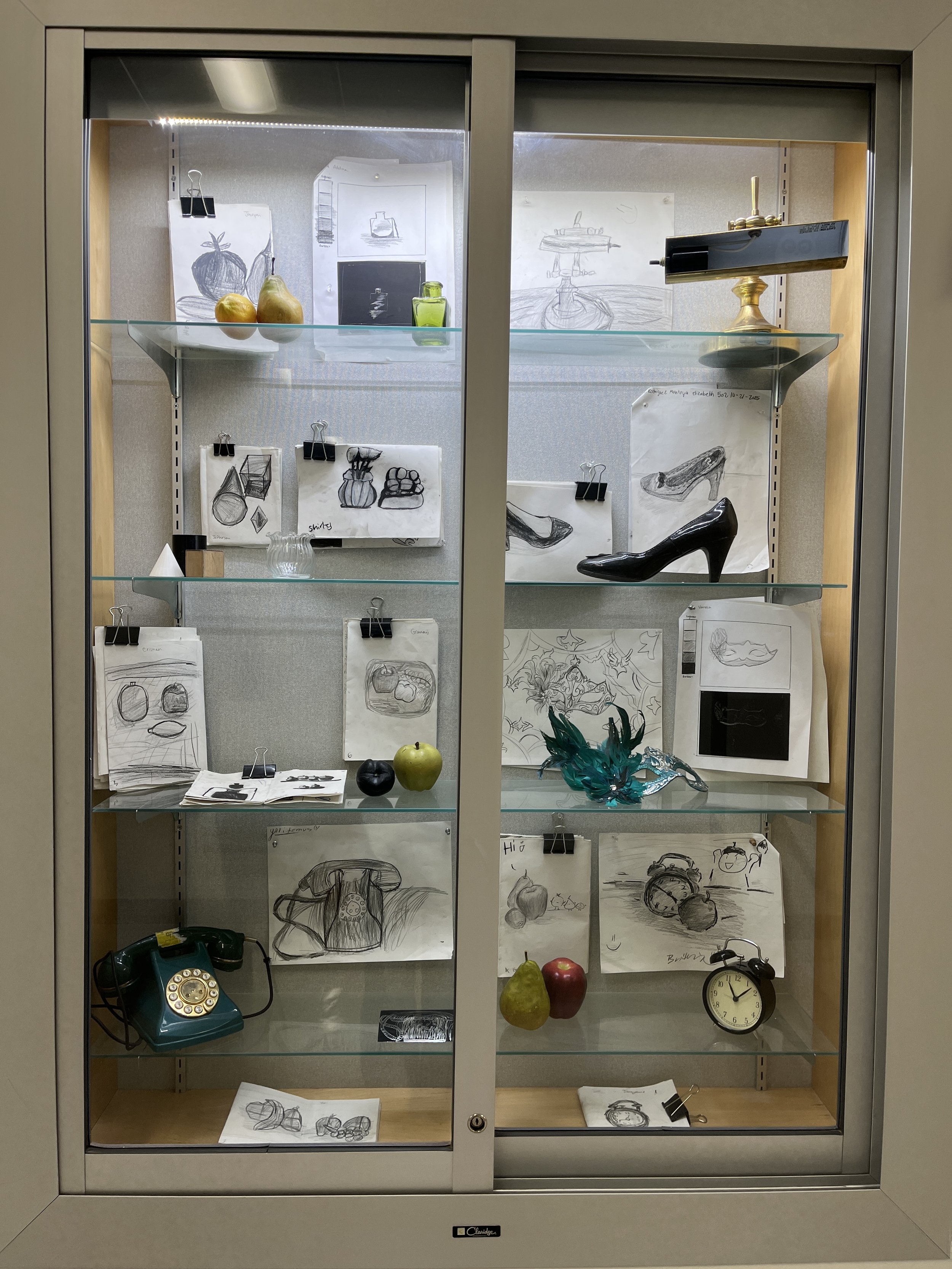
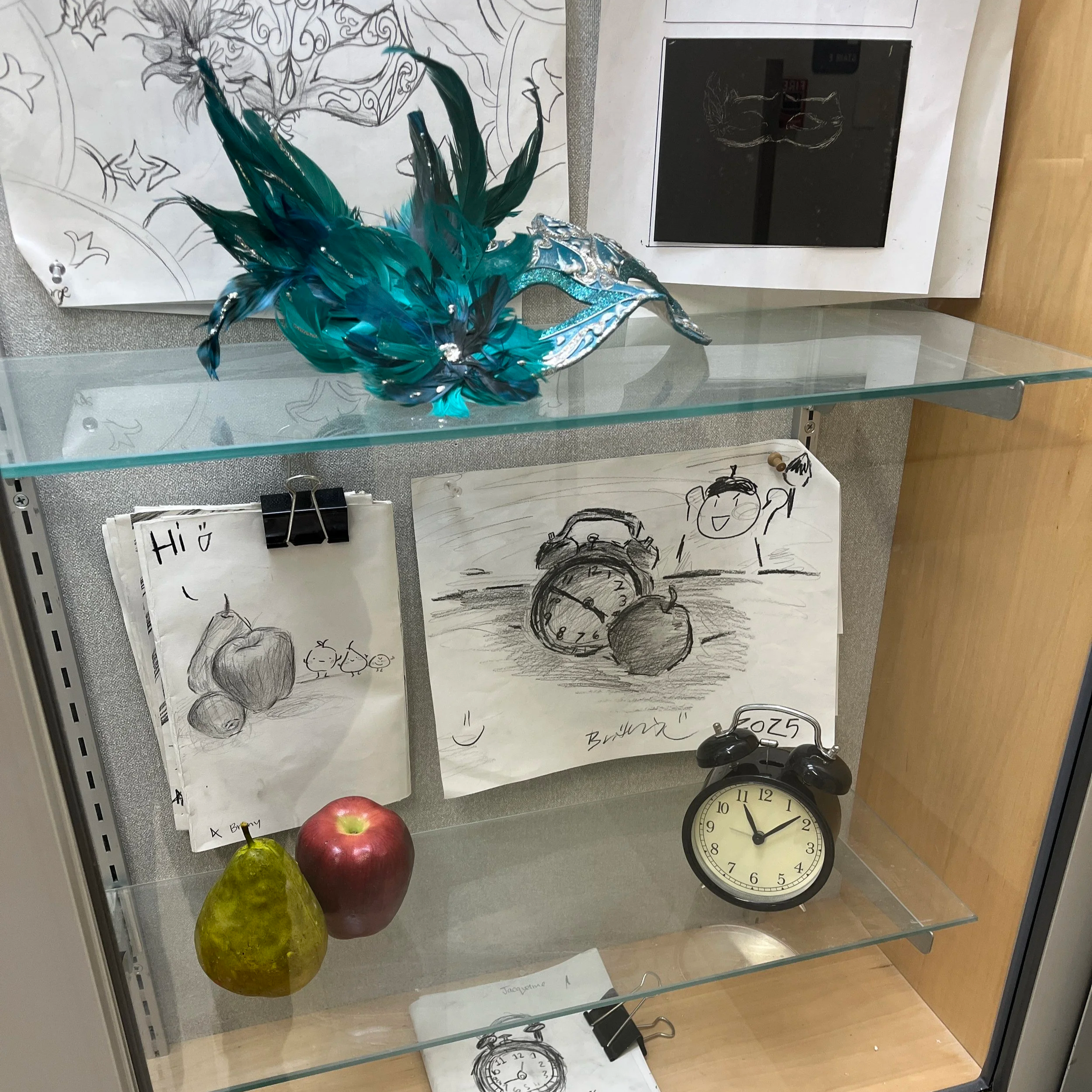
It was fun to display larger drawings and parts of their sketchbooks. I included the objects they drew so viewers could see how they worked their way up from simple to complex shapes.
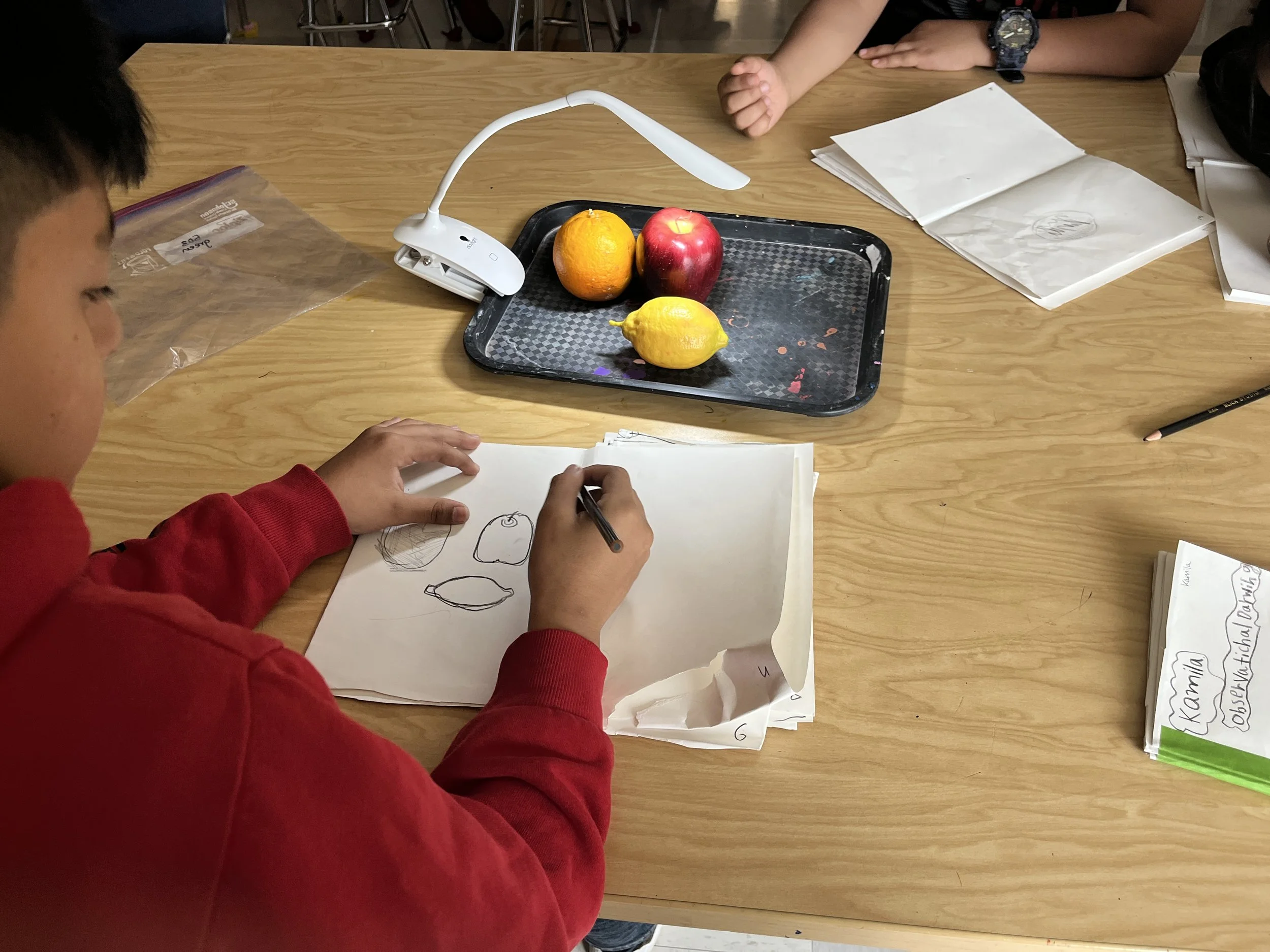
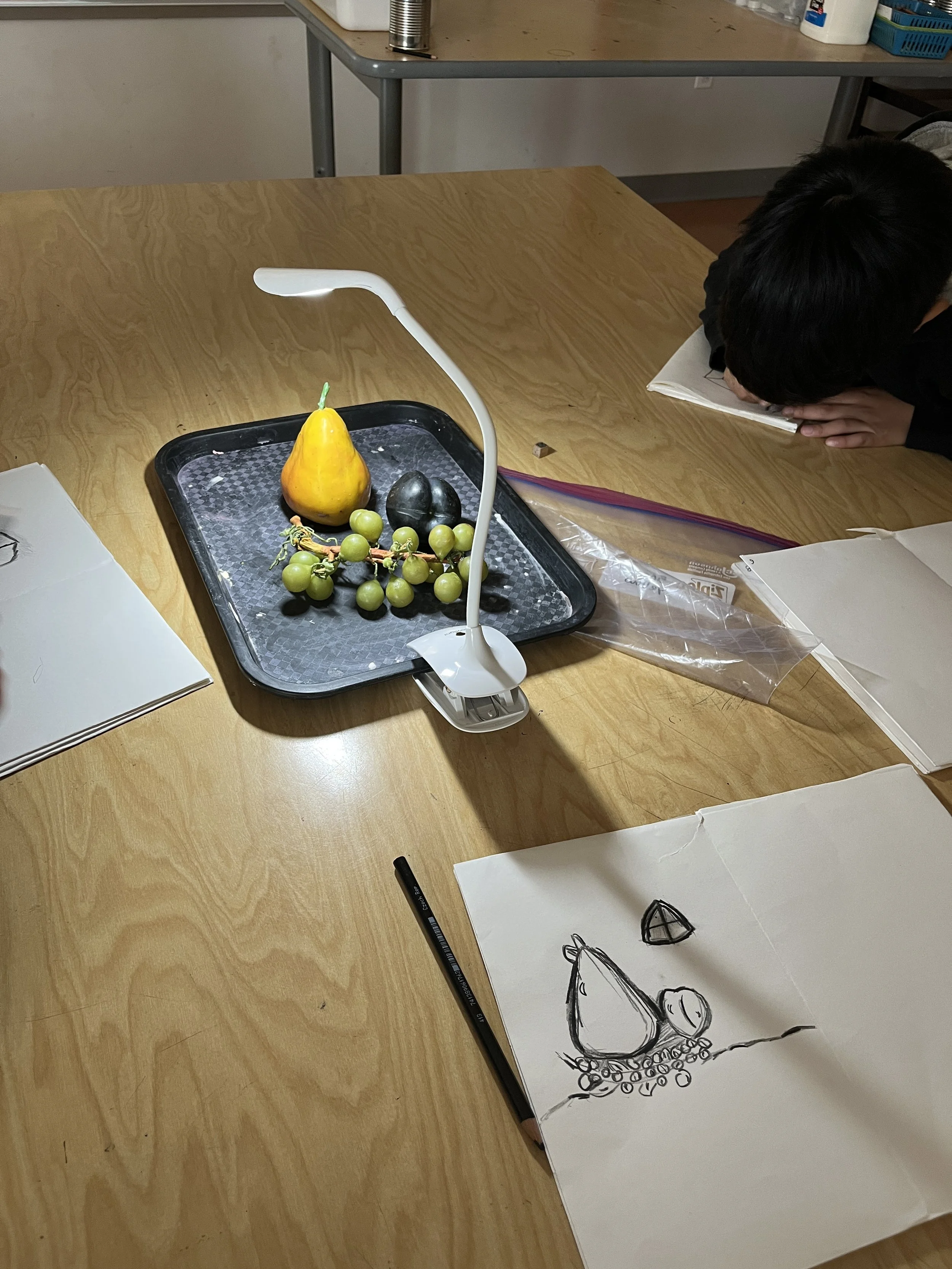
We set up our still lifes with clip lights attached to lunch trays. I inherited a great set of fake fruits from a retired art teacher, and they got tons of use in this unit. Another colleague loves 3D printing and made an entire set of cubes, spheres, pyramids, and cylinders. Lucky us!
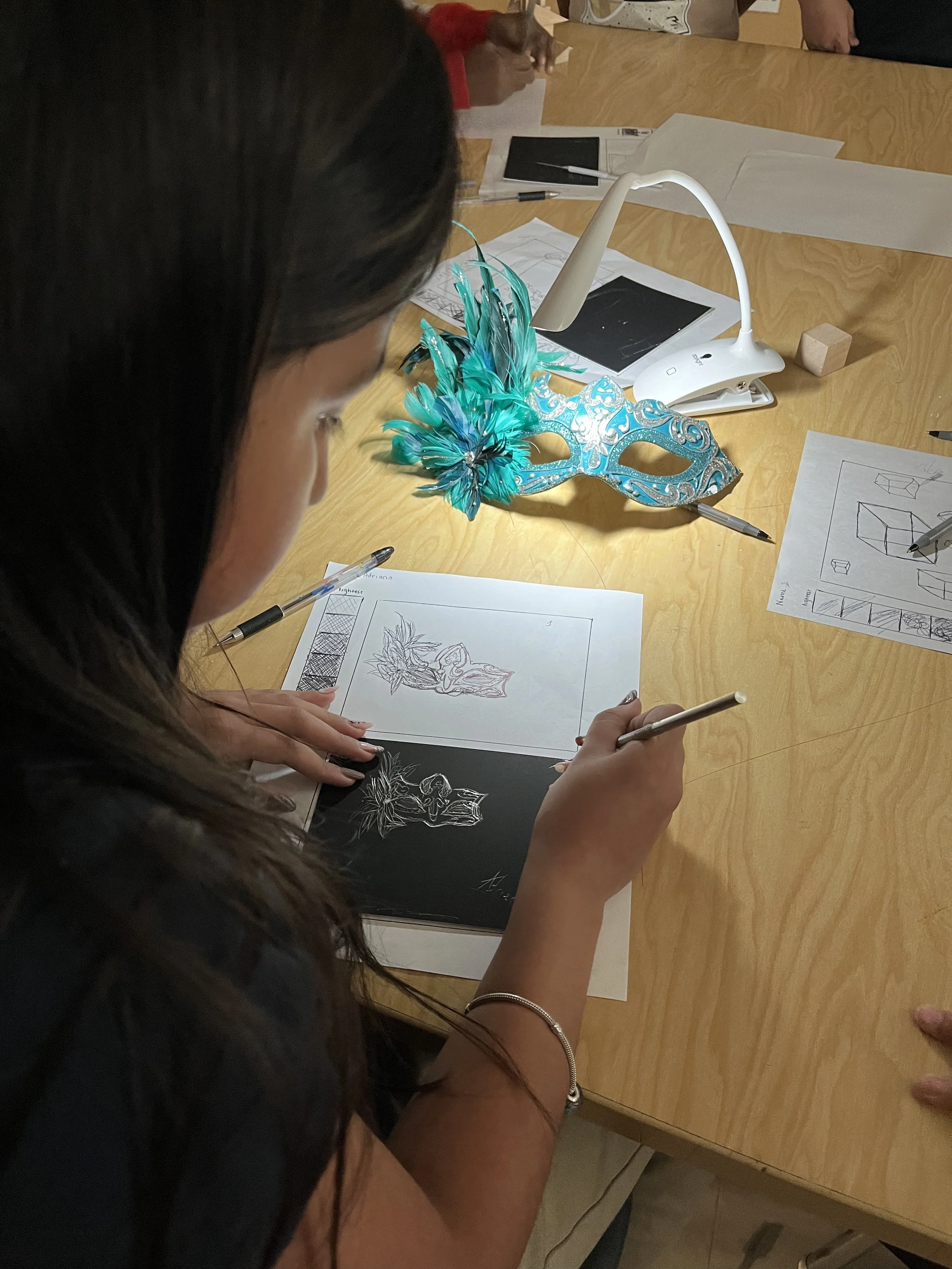
After these simpler shapes I set up a buffet of still life objects that included shoes, clocks, vintage telephones, glass bottles, and other brassy or shiny things to draw. My favorite way to wrap this unit is to have students sketch their favorite object from the past few weeks and attempt a second drawing using a scratchboard.
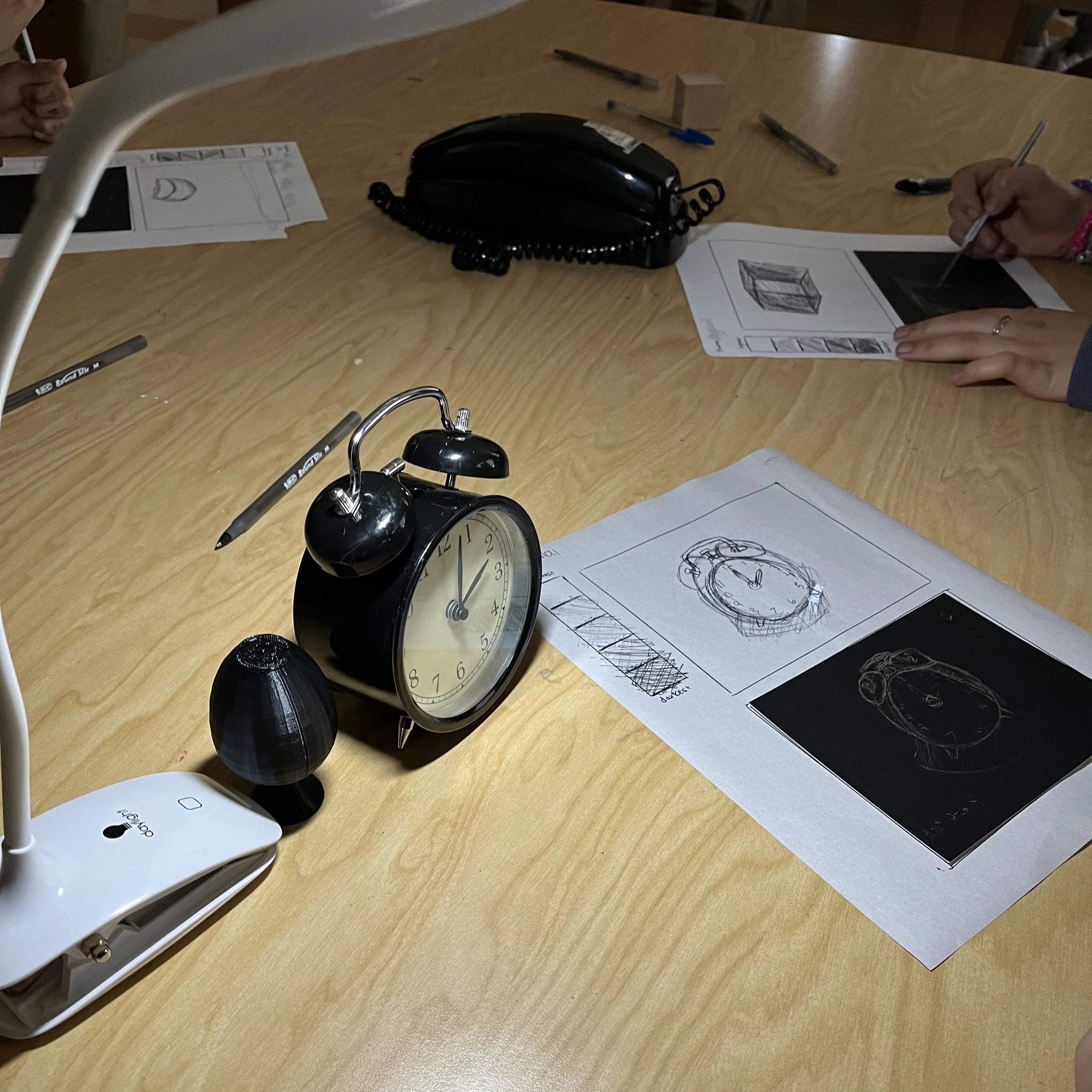
Since I only see elementary schoolers once a week, I keep the pacing interesting by offering lots of materials, approaches and subjects to draw. If it’s early in the year, we have a day of drawing plants or watercolor painting from observation. We try subtractive drawing with charcoal and erasers. I prioritize breadth over depth for younger students to avoid getting bogged down in perfectionism. We make simple sketchbooks that we use for the entire unit so students can chart their progress and feel proud of their improvement even as we try new still life objects and strategies all the time.